Castlemaine · online shop build
Tindarra Roasters
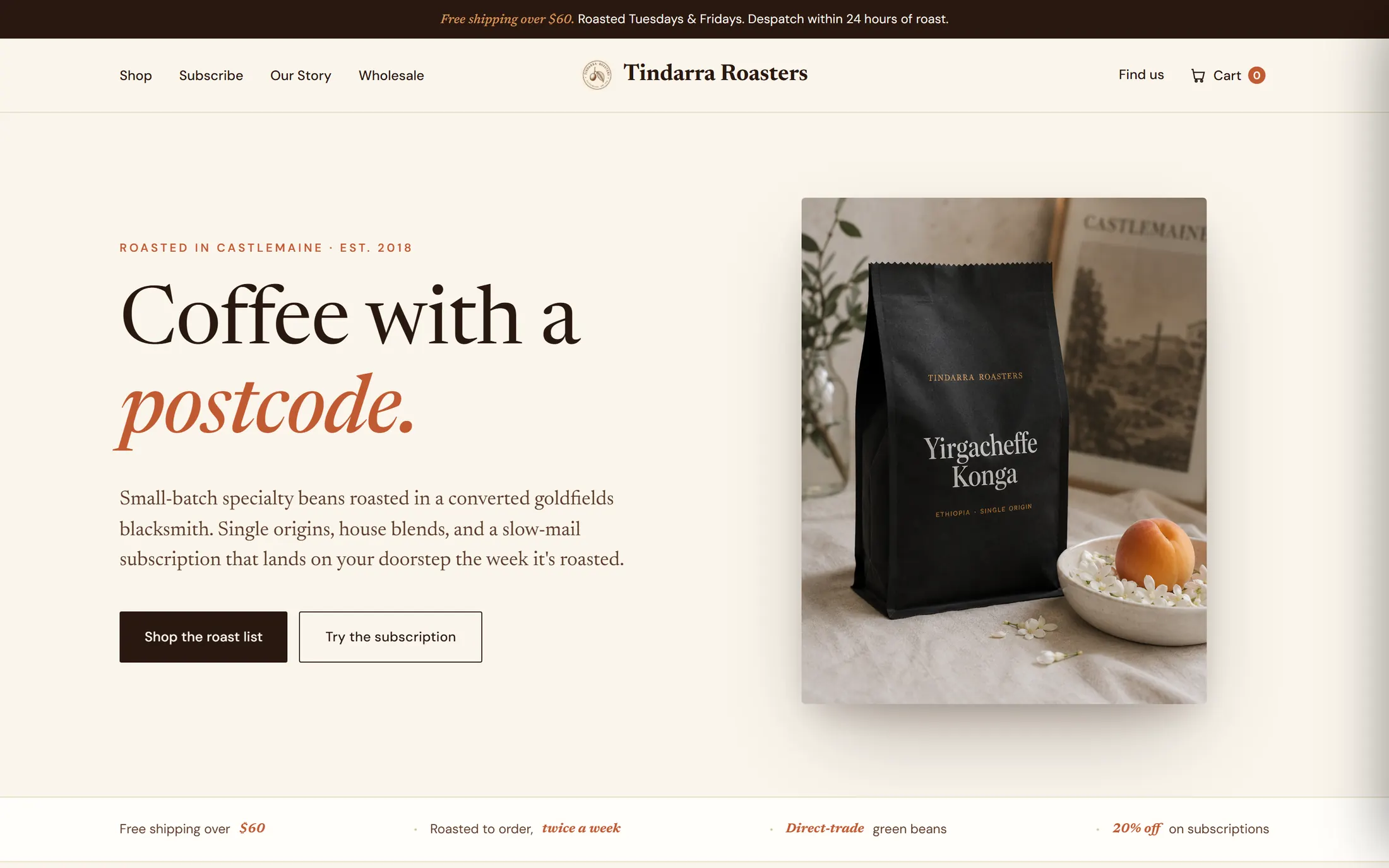
The roastery door opens two days a week. The shop does not close.
The situation
What they were working with.
Tindarra roasts small batches in a converted 1880s blacksmith on Hargraves Lane in Castlemaine. Twice a week, five kilos at a time, on a machine designed in 1996. The roast logs are still kept in a paper notebook.
The roastery door is open on a Friday and a Saturday morning. That is the entire retail week. Everything else, twelve coffees, two subscription plans and the cafes asking about wholesale, has to be handled by the site.
So the build is a shop first. What is on the roast list this week, what is nearly gone, what it costs, and how to get it delivered the week it was roasted.
The decisions
Five calls, and why we made them.
- 01
Twelve products, grouped the way a roaster thinks
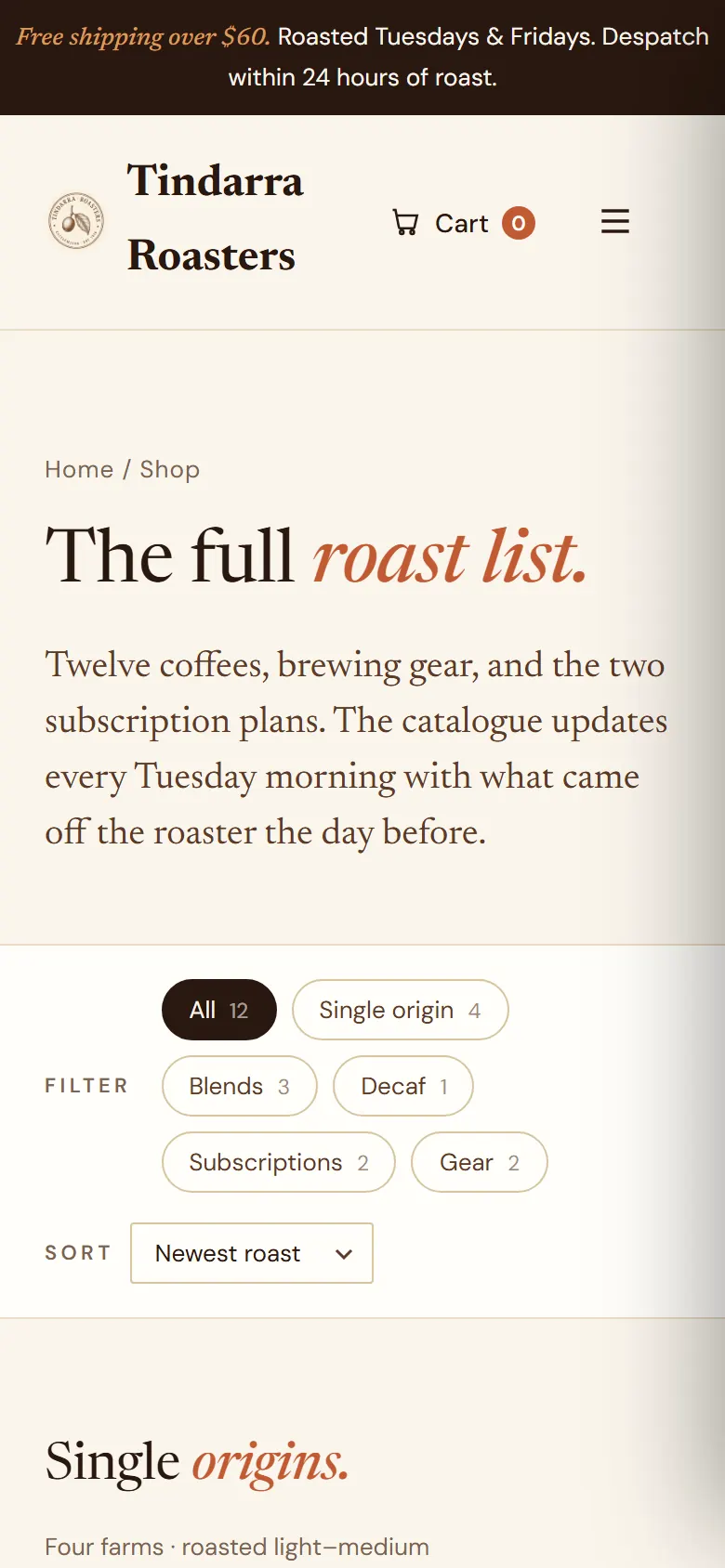
Four single origins, three blends and a decaf, a cold brew and two pieces of gear, plus the two subscription plans. The filters carry their counts, so the shape of the range is readable before anyone scrolls.
- 02
Stock states live on the shelf
New roast, low stock with the number of bags actually left, and sold out with the day it comes back. A shop that hides what is nearly gone throws away the urgency it already has.
- 03
The subscription is the product, not an upsell
Four steps on the home page: pick a plan, choose your grind, we post on Tuesday, pause any time. $18.40 a week, twenty per cent off the bag price, and pause or skip from one link in every email. No account to create, no password to remember, no phone call to cancel.
- 04
Variants price themselves
Weight and grind are chosen on the product's own page, and subscribe-and-save recalculates in place. $24 becomes $19.20 before anything reaches the cart, so nobody has to work out the discount themselves.
- 05
The product page reads like a spec sheet
Roast level, what to brew it in, the roast date and how long it holds. Then the farm: the co-op, the altitude, how long the cherries ferment, how the beans are dried, how many years they have bought from it, and what they paid for the green coffee. Specialty buyers read all of it, so it is all there.
The scope
What is actually in it.
Pages
- Home
- Shop
- A page per product
- Checkout
- Order confirmation
- Our story
- Contact and wholesale
The machinery
- Cart and checkout
- Four steps: contact, shipping address, shipping method priced from the cart (standard free, express $12, or free pickup at the roastery), and payment by card, PayPal, Apple Pay or AfterPay. GST is shown as already included rather than added at the end.
- Subscriptions
- Two plans, roaster's choice or a fixed favourite, with frequency, weight and grind set at signup and changeable any week.
- Inventory that moves itself
- Products fall to low stock and then sold out on their own, so the shelf on the site matches the shelf in the roastery.
- A wholesale path that is not the customer path
- The contact form asks the purpose first. A cafe gets a volume-per-week question and lands in a different inbox from someone asking about a single bag.
- Order confirmation
- The confirmation page carries the order number and what happens next: roasted 8am Tuesday, in the post that afternoon, tracking emailed on despatch.
The screens
Shelf to doormat, in four.
01
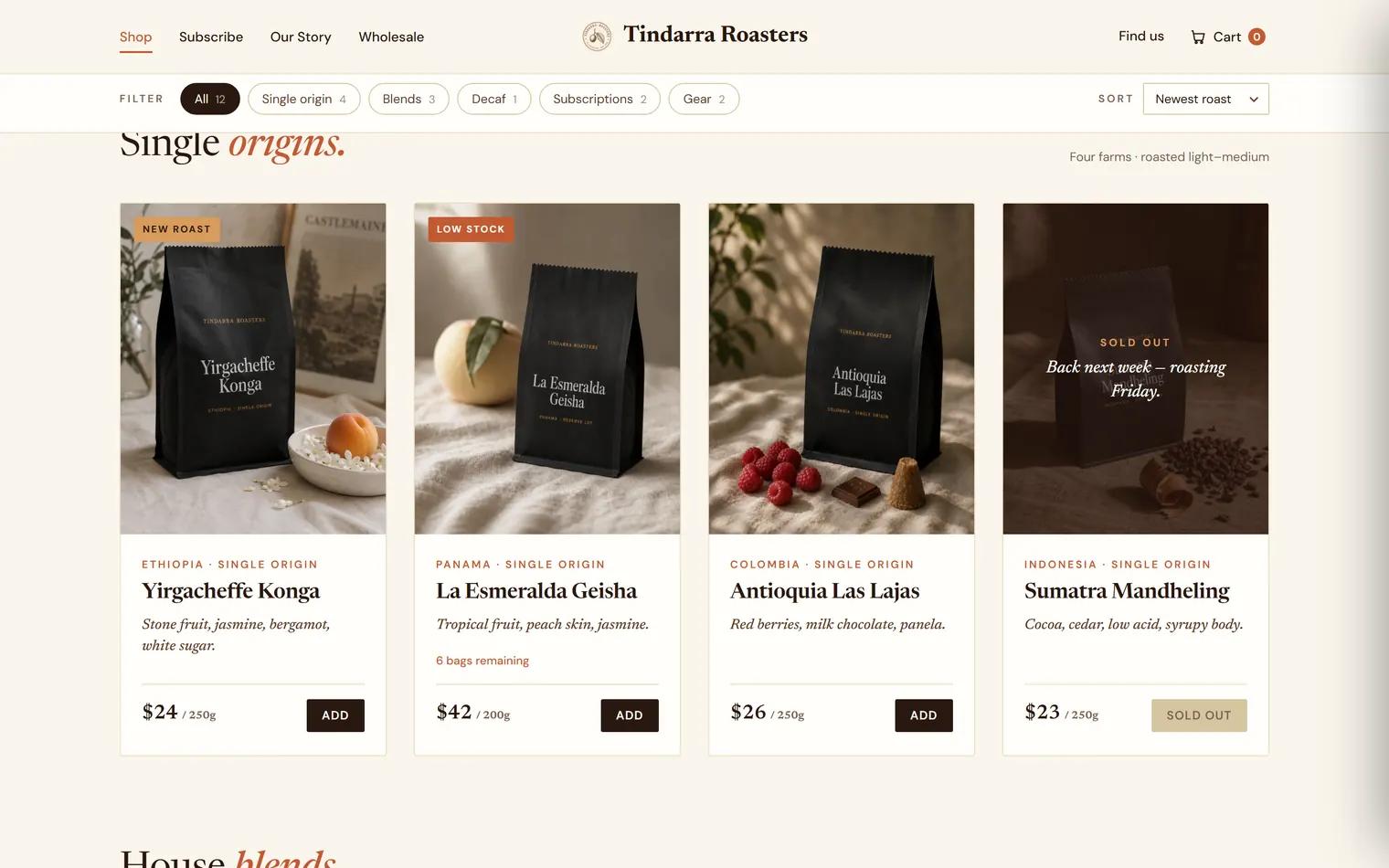
Twelve products, counted filters, and every stock state visible in one pass. 02
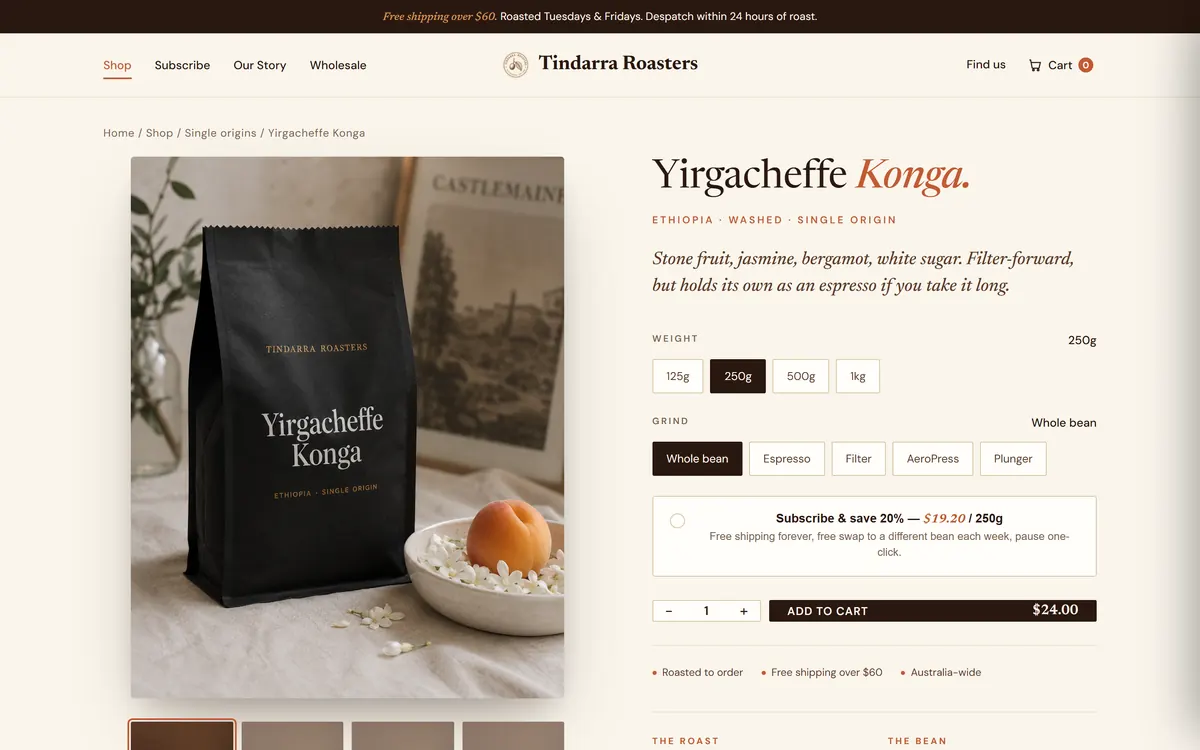
Weight, grind and subscribe-and-save, all repricing the button as they change. 03
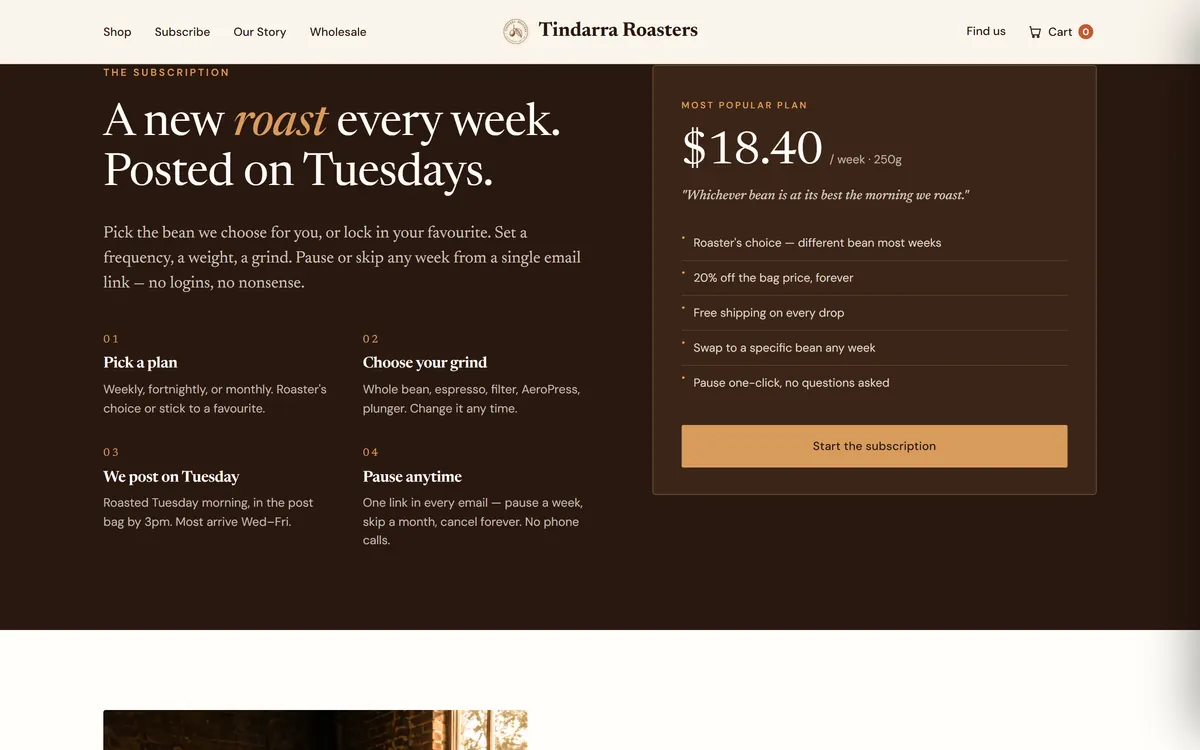
The subscription explained in four steps, with the pause promise in the list. 04
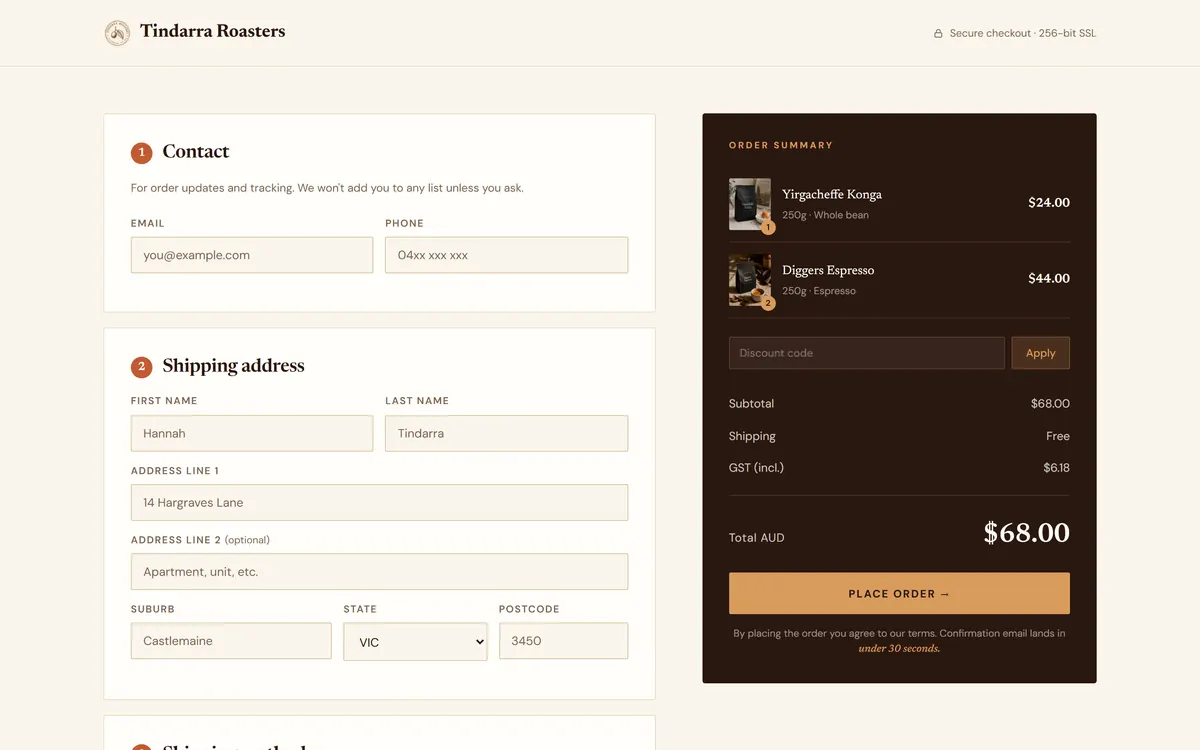
Freight priced from the cart, GST shown as included, no surprises at the last step.
Up close
Small things, on purpose.
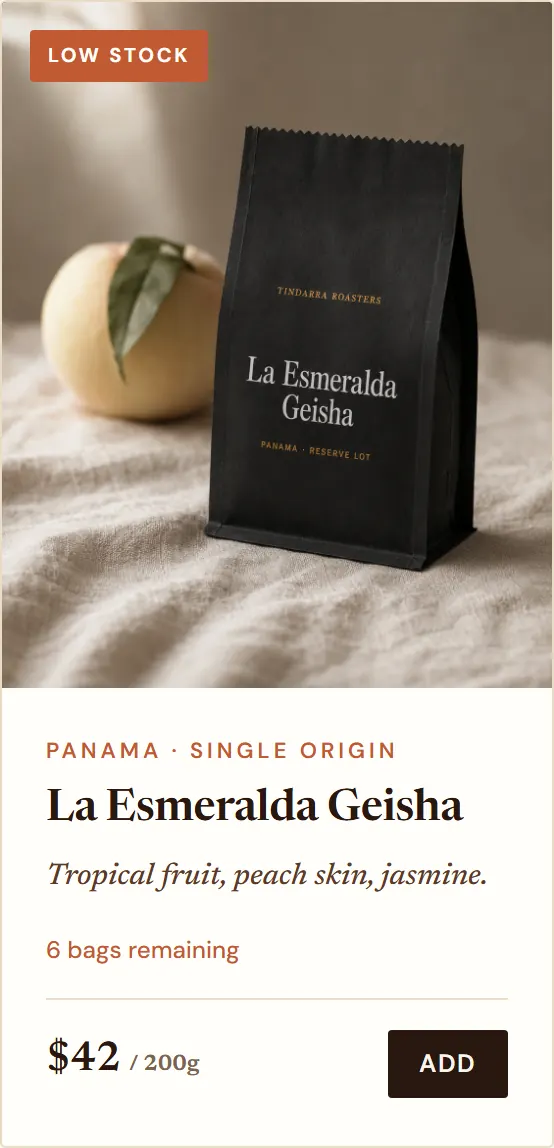

All of it is running right now. Click through and use Tindarra Roasters the way a customer would.
Visit the live site(opens in a new tab)Next build
Saltgrove Movement
A timetable, a membership and a member area, on one small studio's site.
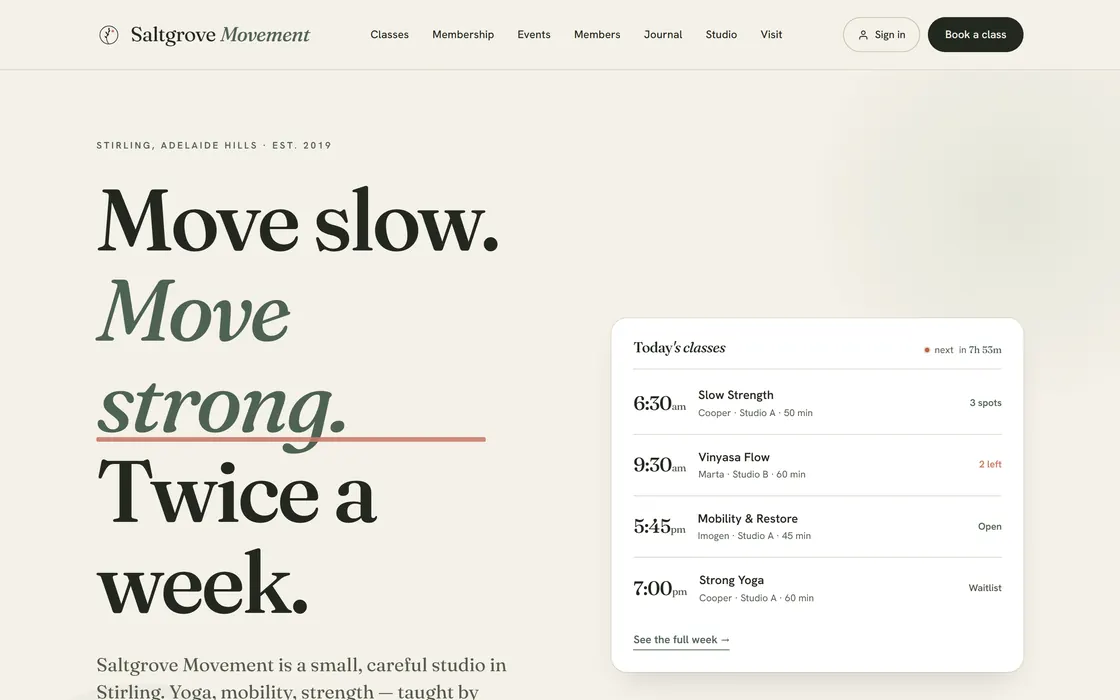
Yours gets exactly the same treatment.
Talk to us